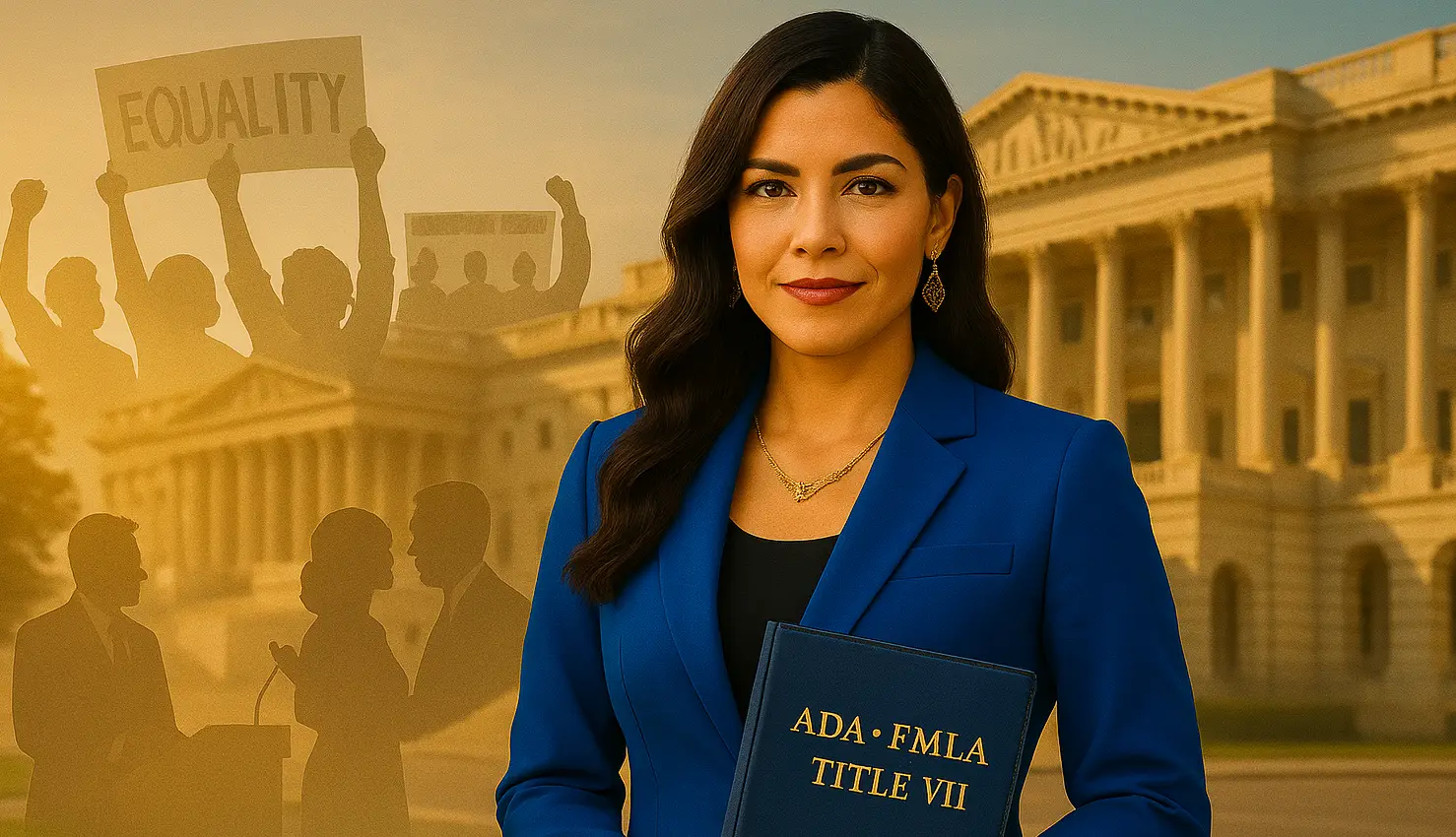
Every HR professional knows these three acronyms by heart — FMLA, ADA, and Title VII. But behind each law that now defines fairness at work lies a story of conflict, compromise, and courage. These weren’t quiet policy updates — they were battles fought in Congress, on courthouse steps, and across kitchen tables in American homes.
Before the Family and Medical Leave Act (FMLA) became law in 1993, millions of employees faced impossible choices between their jobs and their families. Mothers gave birth and lost paychecks. Sons cared for aging parents and lost promotions. It took nearly a decade of congressional debate — and multiple vetoes — before lawmakers finally agreed that caring for your loved ones should never cost you your livelihood. FMLA was born not from convenience, but from compassion that demanded legislation.
Then came the Americans with Disabilities Act (ADA) in 1990 — one of the most transformative laws in workplace history. It didn’t emerge overnight; it grew from decades of activism by individuals who refused to be defined by their disabilities. They fought to be seen, not pitied — to have access, not charity. And when the ADA finally passed, it didn’t just change hiring practices; it changed hearts. It taught HR professionals to stop asking “Can they do the job?” and start asking “What support do they need to succeed?”
And of course, the Civil Rights Act of 1964 — particularly Title VII — was the spark that lit the modern HR profession itself. Born from the Civil Rights Movement, it outlawed employment discrimination based on race, color, religion, sex, or national origin. But let’s be clear: this wasn’t a calm, bipartisan handshake. It was political war. Debates raged for months. Amendments flew. And still, against all odds, it passed — proving that justice can win when courage refuses to sit quietly.
Each of these landmark laws — FMLA, ADA, and Title VII — reminds us that politics isn’t something HR can ignore. It’s the soil from which our profession grows. Every compliance manual, every training session, every accommodation request is a living echo of those debates. HR is not a bystander in politics; we are the bridge that carries those laws into action, into policy, and into people’s lives.
So, the next time a bill is introduced, or a committee hearing makes the headlines, don’t tune it out. That debate might just become tomorrow’s HR policy — and you, mi querida HR Congresista, are the one who will bring it to life. Because laws don’t enforce themselves. People like us do. 💜
Elga Lejarza
Founder & CEO
HR.Community